• News Feed
    • All Groups
    • Male
    • Female
    • CS TREASURE SEARCH
    • Mastermind
    • Pacman
    • Tetris
    • Tetris Ranking
    • DIABLO
    • DIABLO II
    • DOOM
    • DOOM II
    • DOS ZONE
    • All site videos
    • My videos
    • Add video
    • All Pages
    • Create new page
    • All Polls
    • All Events
    • My Events
    • Add Event
    • Add File
  • Login Register
    🌲🌳 Science can save our 🐬 beautiful 🐟 planet 🌏 right now! 🌲🌳
      • Posts
      • Members
      • Group About
      • Files
      • Videos
      • Polls
    Joseph Gatt
    August 2, 2026, 12:23 pm -


    Clare Patterson (1922-1955) was an American geochemist. He obtained his Ph.D. from the University of Chicago, and spent his entire professional career at the California Institute of Technology (Caltech).


    He is credited with alerting the world that about the high levels of environmental lead contamination . He studied ice cores from Greenland and Antarctica. The newer the ice, the greater the concentration of lead. He compared ancient bones with modern ones, and discovers that people living today carry hundreds of times more lead than ancient humans did. And then he deduced the principal source of this lead contamination: leaded gasoline. Since the 1920s, companies had mixed lead into gasoline to prevent engines from knocking. They sold it under the name Ethyl. Cars across the planet were releasing tiny lead particles into the air, soil, water, and human bloodstream.


    For more than 40 years, the safety of leaded gasoline was studied almost entirely by one scientist, Robert Kehoe. His research was financed, reviewed, and accepted by the same company manufacturing the lead. He claimed the exposure was normal. He insisted it was safe. The world accepted his conclusions because no independent expert was challenging them.


    Then, in 1965, Clair Patterson stepped forward, and published the truth. The average American carried about 100 times more lead than nature intended.


    The industry was wealthy and influential, and it moved against him. His funding was reduced. Government agencies denied him contracts. In 1971, officials removed him from the national committee studying airborne lead. The most qualified expert in the world was shut out of the room.


    They called him unstable. Eccentric. Obsessed. He continued fighting for 30 years. Slowly, the evidence prevailed. The Clean Air Act passed. Unleaded fuel was introduced. Year after year, the poison was removed from gasoline pumps. By 1986, leaded gasoline had been nearly eliminated in the United States. Within a few years, the lead level in the average American’s blood had fallen by half.


    Clair Patterson did not stop with gasoline. He helped remove lead from food cans, household paint, and children’s daily lives. In 2021, the final country still selling leaded gasoline stopped. Billions of people now breathe cleaner air, and a direct path leads back to one determined scientist working in a plastic suit.


    Clair Patterson died in 1995. And there is one thing the industry that opposed him would prefer you to do. Forget him. Most people have never heard his name because his victory was so complete that the threat became almost invisible. No catastrophe replayed on television. Only billions of people living with healthier blood and clearer minds, unaware that a battle was fought over their bodies and won by someone whose name they do not know.


    (This is a re-edit of the original post by Hiro King:

    openpostzone.quora.com/A-man-searching-for-the-age-of-the-Earth-accidentally-discovered-that-every-living-person-was-being-poisoned-Then-the-i)





  • Comment
  • Like
  • Share
  • Timmy Walsh
    July 22, 2026, 1:59 am -


    The 1980s panic was real: rain as acidic as lemon juice was dissolving ancient statues and turning forests into skeletal wastelands. The crisis ended because a pioneering 1990 law stopped it. During that era, high-sulfur coal burned in power plants and nitrogen oxides from car exhaust drifted into the atmosphere, reacting with water and oxygen to form sulfuric and nitric acids.


    The ecological impact was profound. Across the Northern Hemisphere, hillsides were left covered in dead, leafless tree trunks. Entire lake ecosystems in places like the Adirondacks and Scandinavia became completely devoid of fish, while limestone buildings weathered rapidly in city centers. Decades of acid rain killed vast swaths of high-altitude forests in Central Europe, leaving hillsides covered in skeletal tree trunks.


    The turning point came in 1990. The United States implemented an update to the Clean Air Act that pioneered a cap-and-trade system for sulfur dioxide. Rather than dictating exactly how every factory had to operate, the government set a strict upper limit on total emissions and issued allowances to power plants. Companies that reduced their emissions below their limit—by installing flue-gas desulfurization scrubbers or switching to low-sulfur coal—could sell their extra allowances to dirtier plants. Similar protocols were adopted across Europe to curb transboundary air pollution.


    The financial incentive worked faster and cheaper than predicted. Since 1990, sulfur dioxide emissions in the US have fallen by more than 90%, and nitrogen oxide emissions have dropped significantly as well. The acidity of rainfall in the Northeast returned to pre-industrial levels, allowing historically dead lakes to naturally repopulate with fish and forests to recover from decades of chemical weathering.


    (Source: www.quora.com/Whatever-happened-to-acid-rain-I-remember-back-in-the-80s-that-it-was-going-to-destroy-everything-Were-still-here-What-happened)

  • Comment
  • Like
  • Share
  • Joseph Gatt
    April 15, 2026, 12:31 pm -


    Robotic lawnmowers used at night are devastating the lives of hundreds of hedgehogs, which has provoked the anger of conservationists and scientists. According to a study by the Leibniz Institute for Zoological and Wildlife Research, almost 50% of the 370 hedgehogs examined died or had to be euthanized after an unexpected encounter with a lawnmower. According to the study, hedgehogs are especially at risk from lawnmowers that operate at night, because that is when they come out to feed. The problem is that they are not used to fleeing when there is danger, but rather they rely on their defensive system — the spines — which obviously are no match against electronic lawnmowers. As a result the hedgehog population is steadily declining.


    The scientists who conducted the study at the Leibniz Institute are consequentially calling for a ban on the use of lawnmowers at night, which would be a simple way to protect hedgehogs.


    Source: www.izw-berlin.de/en/press-release/new-research-into-hedgehogs-injured-by-robotic-lawn-mowers-discovers-a-significant-but-solvable-animal-welfare-and-conservation-problem.html

  • Comment
  • Like
  • Share
  • Joseph Gatt
    November 24, 2025, 6:30 pm -


    Flickering electrical lights are facilitating the coexistence of farming communities, with their wildlife neighbours, namely lions.


  • Comment
  • Like
  • Share
  • Joseph Gatt 🌲🌳 Science can save our 🐬 beautiful 🐟 planet 🌏 right now! 🌲🌳
    October 1, 2025, 8:33 am -

    The Rhisotope project.


    Scientists engaged in the Rhisotope project are making rhino horns radioactive to save the species from poachers. According to Arrie van Deventer, founder and managing director of the South African Rhino Orphanage (https://therhinoorphanage.org/), this Rhisotope project "could be the Holy Grail to save the species". More details about this groundbreaking Rhisotope project could be found here: https://rhisotope.org/

  • Comment
  • Like
  • Share
  • Joseph Gatt
    August 3, 2025, 8:18 pm -


    International Fund for Animal Welfare (IFAW) is using beehives to establish a buffer zone around village perimeters to protect them from wandering elephants who may trample crops or come too close into contact with humans. Reducing human-elephant conflict incidences in this way helps both the villagers, as well as the migrating elephant herds, and augurs well for a future where wildlife and human communities can coexist and thrive.


  • Comment
  • Like
  • Share
  • Tom Smith 🌲🌳 Science can save our 🐬 beautiful 🐟 planet 🌏 right now! 🌲🌳
    January 25, 2025, 10:08 pm -

    Intelligent parking system could save precious urban space

    On January 16, 2025, in Guangdong Province, located in southern China, a video showcased the operation of an intelligent parking system. A man was seen entering his license plate number at the entrance of a garage. Moments later, the system displayed his vehicle’s image, and after confirming the retrieval, he stood by the garage door. Within about 10 seconds, a white car was automatically transported down from an upper level, ready for the man to drive away. The advanced system impressed Chinese viewers with its convenience and efficiency in both parking and retrieval processes.

  • Comment
  • Like
  • Share
  • Joseph Gatt
    December 29, 2024, 9:25 pm -

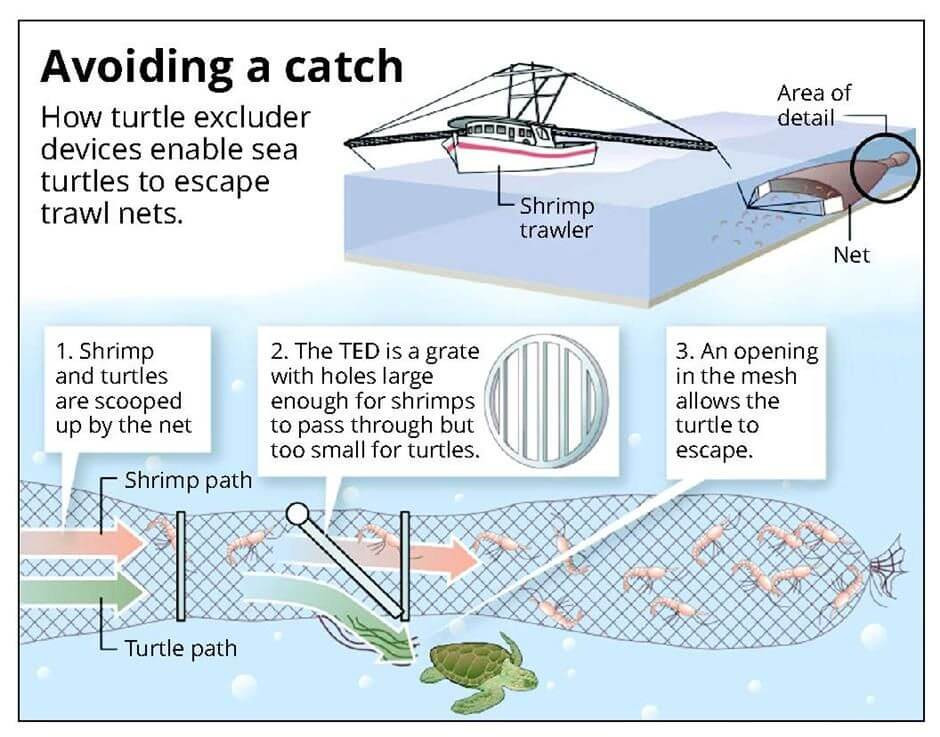
    A turtle excluder device (TED) is a specialized device that allows a captured sea turtle to escape when caught in a fisherman's net. A TED is a grid, made of metal bars, that is fit into a trawl net. Small animals, such as shrimp, pass through the grid into the mesh bag at the end of the trawl and are caught. When larger animals, such as sea turtles, sharks, and stingrays, enter the trawl net, they are stopped by the TED and are able to exit through an opening either at the top or bottom of the net.


    TEDs were first introduced in the 1970s, mainly through the efforts of NOAA Fisheries. Following 30 years of mandatory use of TEDs throughout the shrimp fishing industry, gear improvements are being introduced almost yearly.


    This video here shows a TED works in practice:

    videos.fisheries.noaa.gov/detail/video/3828026198001/b-roll:-turtle-excluder-devices

  • Comment
  • Like
  • Share
  • Joseph Gatt
    September 1, 2024, 6:37 pm -


    Biorock reefs are turning infertile, dead and dying areas, into pristine reefs full of fish in just a few years. Biorock structures are in place in Indonesia, the Maldives, Papua New Guinea, the Seychelles, Japan, the Caribbean, and the Pacific. It is clear that this biorock process has a lot to offer in rehabilitating damaged coral reefs, in all tropical areas.


  • Comment
  • Like
  • Share
  • Joseph Gatt 🌲🌳 Science can save our 🐬 beautiful 🐟 planet 🌏 right now! 🌲🌳
    May 18, 2024, 9:52 pm -

    Bamboo Tower invention is condensing 26 gallons of water a day from thin air

    For isolated regions, such as in Ethiopia, where access to fresh water is a daily challenge, an innovative bamboo tower that is proving to be a lifesaver.

  • Comment
  • Like
  • Share
    • First
    • 1
    • 2
    • 3
    • Last
    Back to InboxGroup About
    Back to InboxMembers (8)
    Back to InboxSPONSORED
    Linda Sacketti
    https://www.lindasacketti.art/fine-art-prints

    Fine Art prints

    David Meek
    https://davidmeekscreations.com

    Models and paintings

    Chessbites.com
    https://www.chessbites.com

    Great to search for chess games and totally free. Courtesy of Timothy Mifsud, Malta's national chess champion for 1993-1998.

    © COPYRIGHT ZAFOIDAboutTerms and Conditions
    © COPYRIGHT ZAFOID© COPYRIGHT ZAFOIDAboutTerms and ConditionsPrivacy

    By using this site, you agree to our Privacy Policy including the use of cookies to enhance your experience.