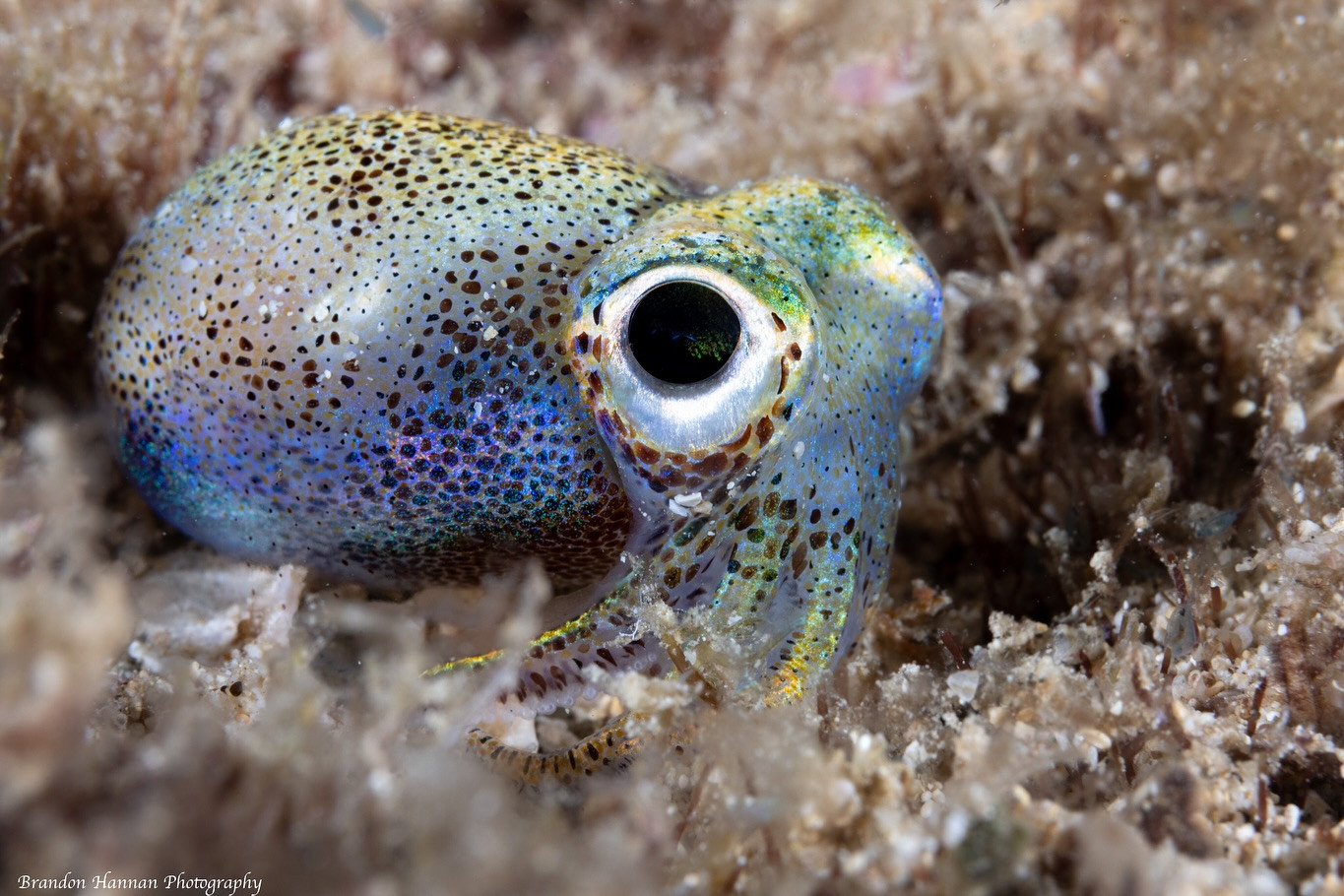
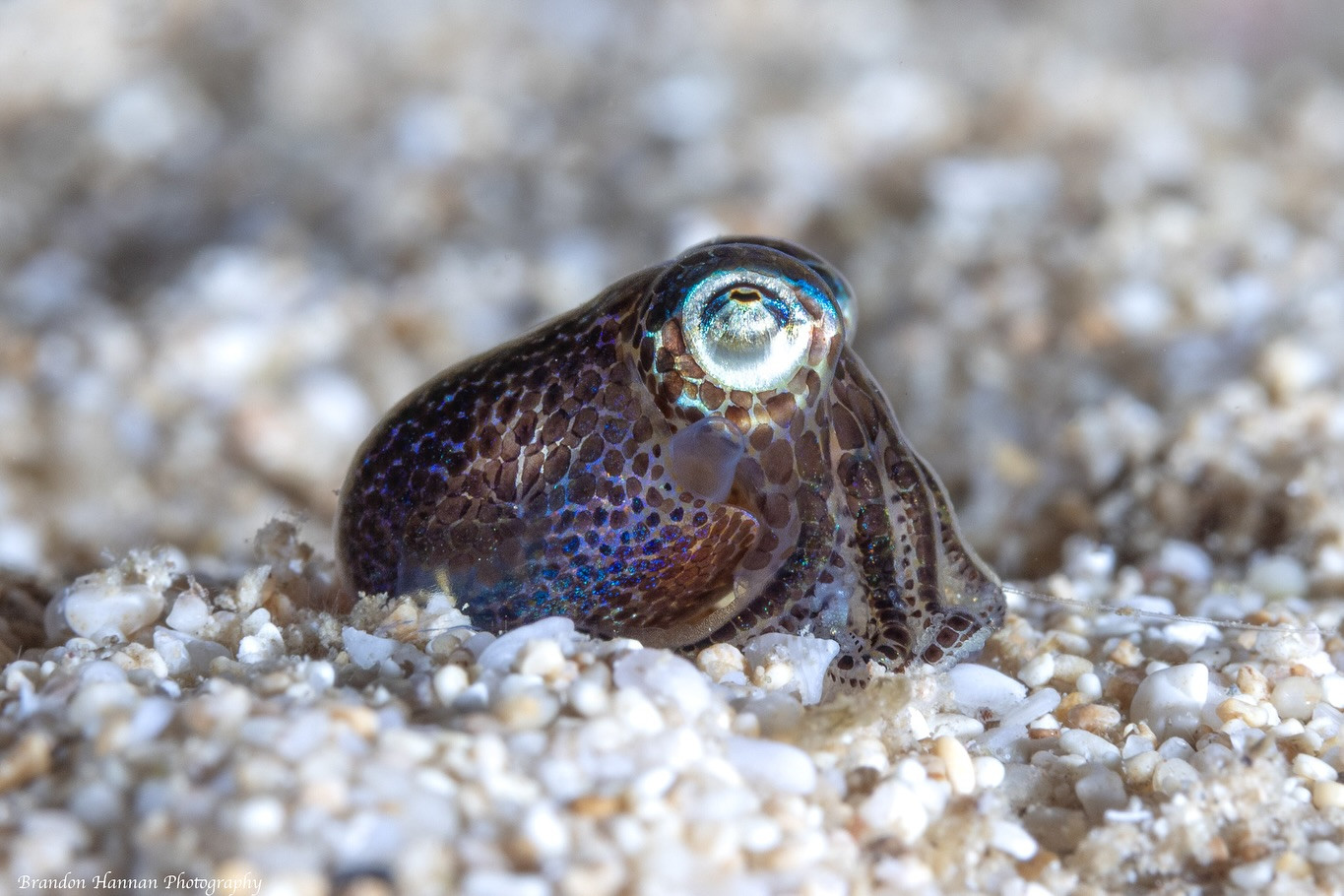
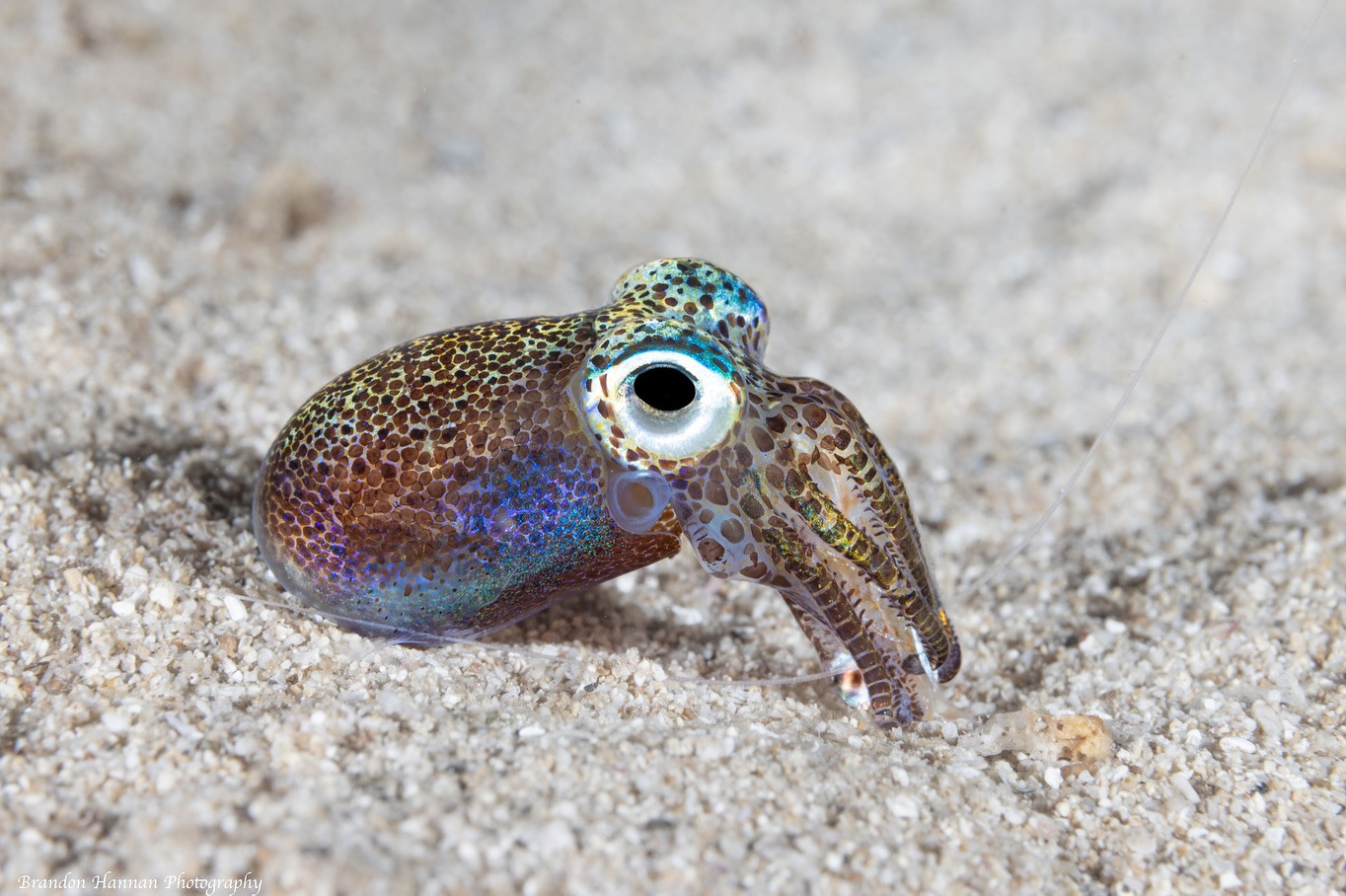
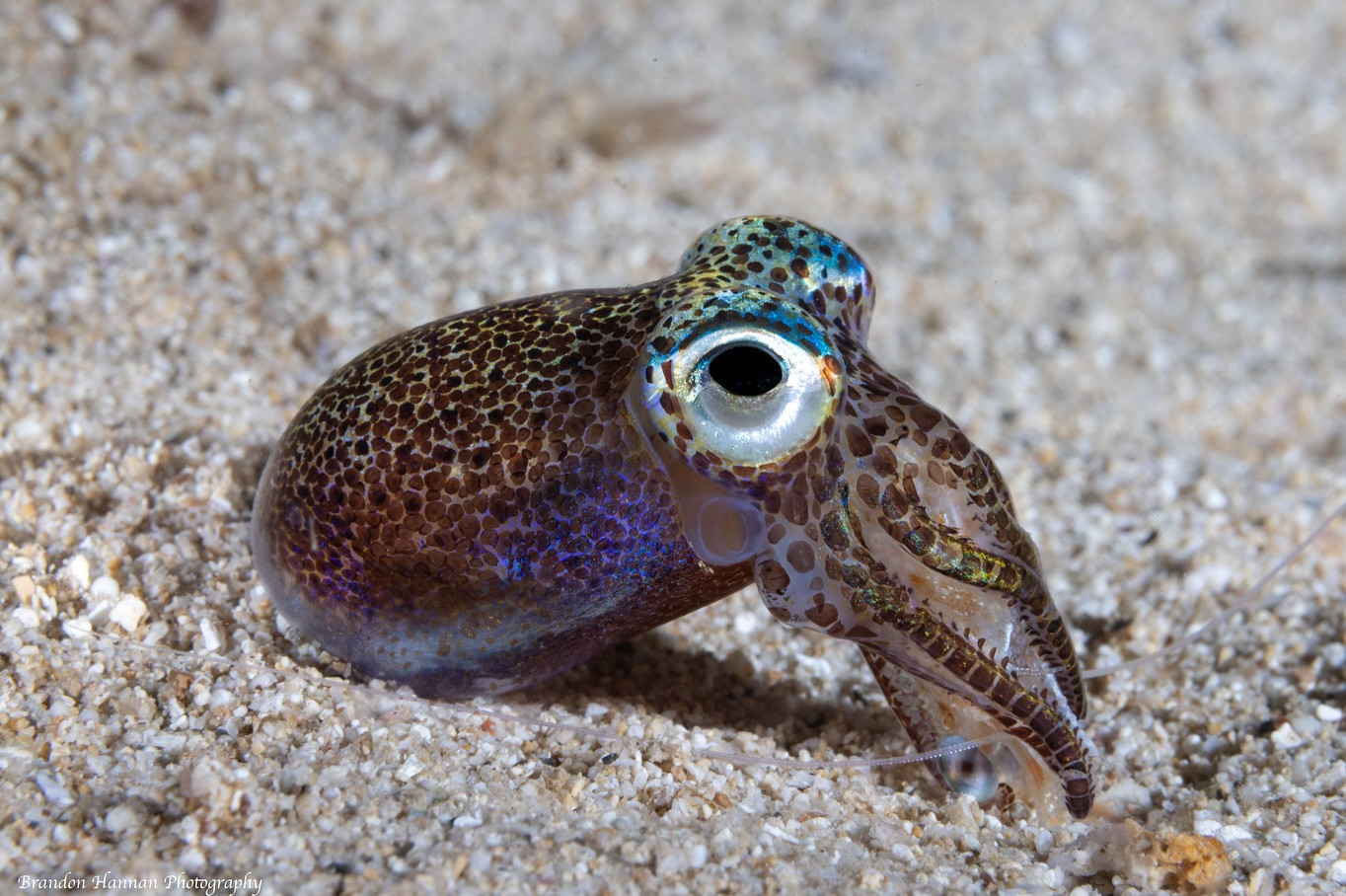
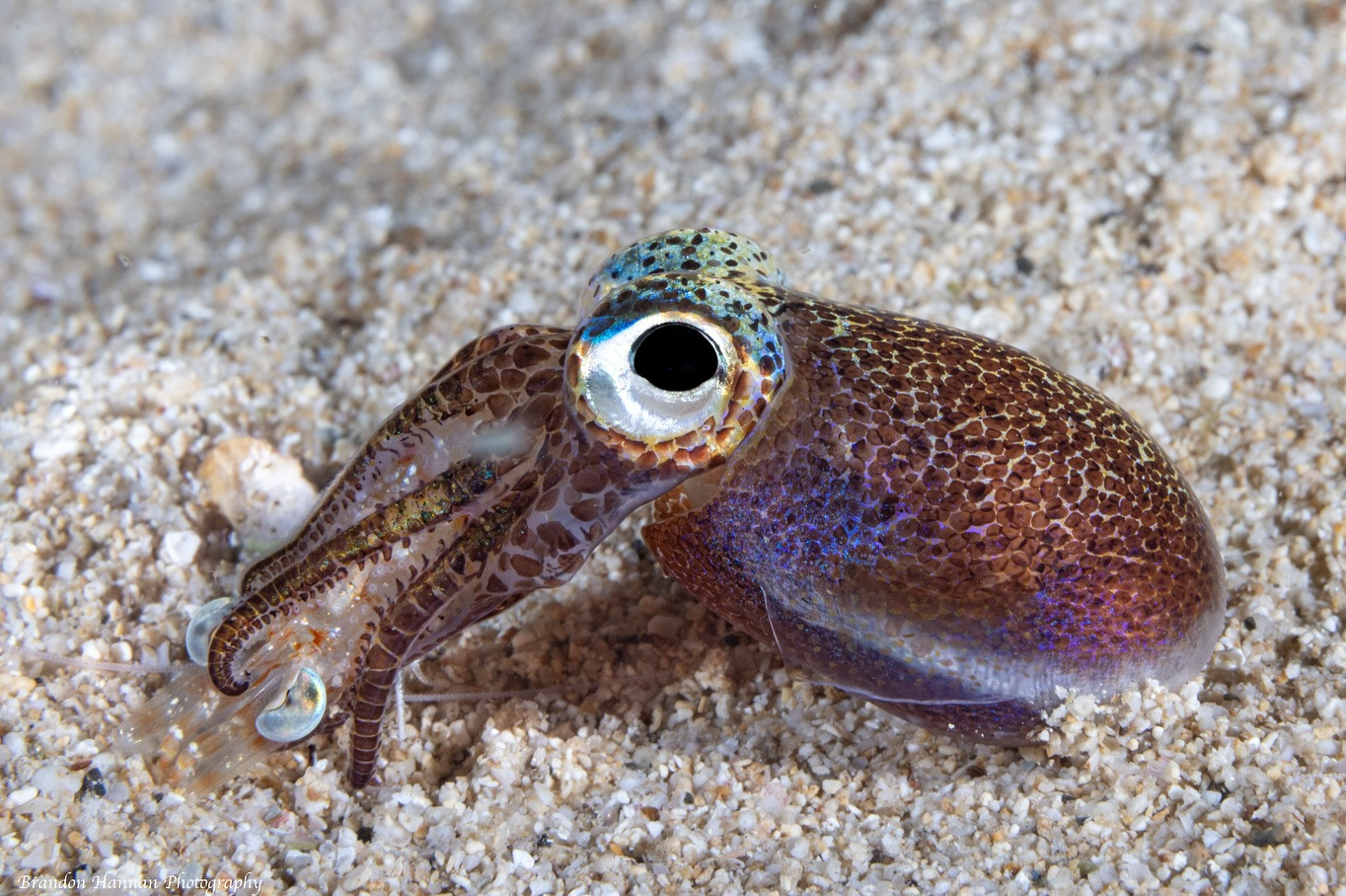
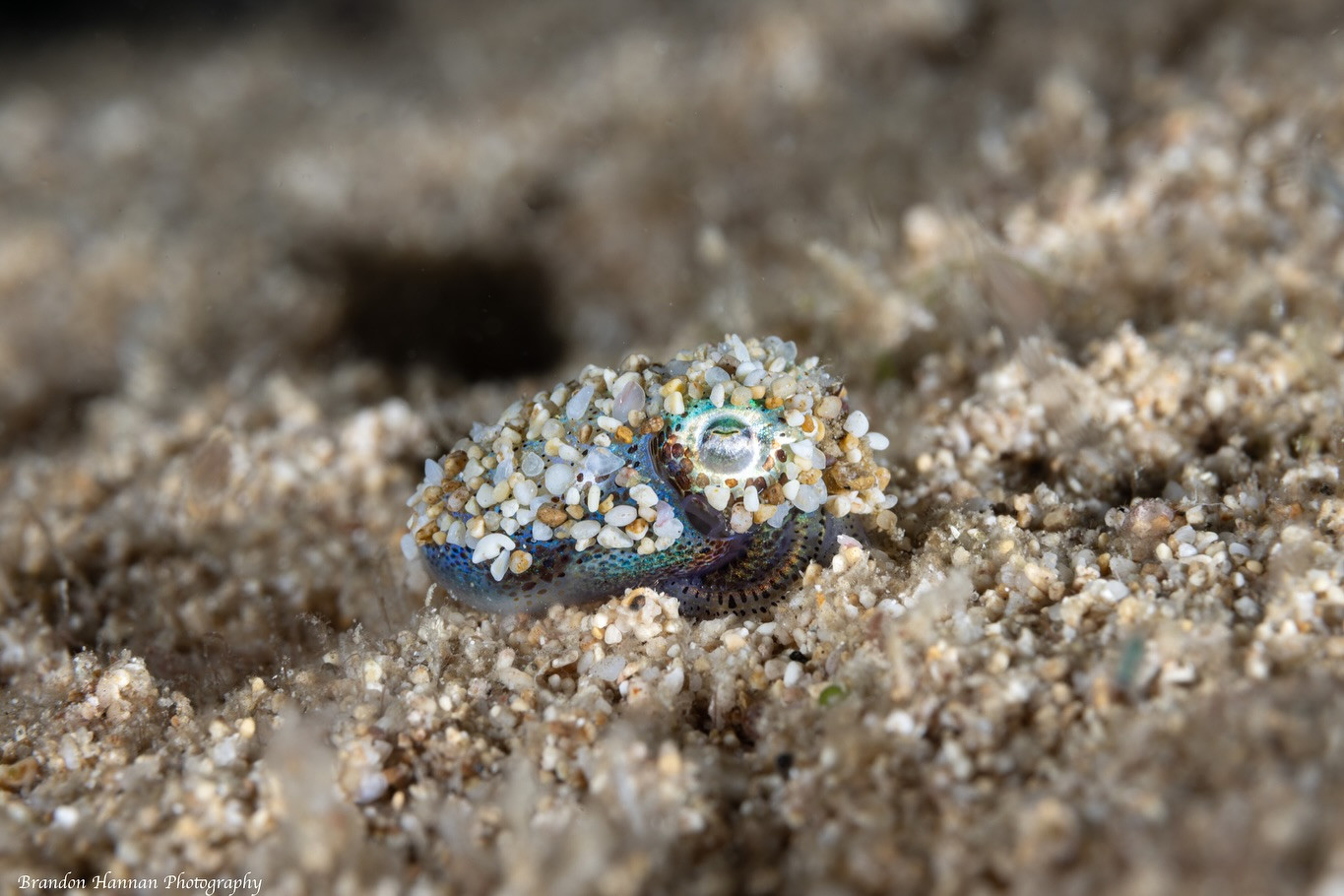
This sequence of images shows a Hawaiian bobtail squid capturing a shrimp, whilst the final image shows the Hawaiian bobtail squid resting during the day. These images were taken by wildlife photographer Brandon Hannan off the coast of Oʻahu, Hawaii.
In the wild, the Hawaiian bobtail squid can only be found in the shallow coastal waters off the Hawaiian Islands and Midway Island. It is smallish, only about 3 cm when fully grown. The squid houses bioluminescent bacteria in its mantle, within a special "light organ". When the squid leaves the safety of the seafloor to hunt at night, the bacteria hide the squid’s silhouette by matching the amount of moonlight and starlight hitting the top of its mantle, hiding their silhouette from predators below in a process called counterillumination — making it virtually invisible in moonlit waters when viewed from below. In return, the small squid provides the bacteria with food (a sugar and amino acid solution). Then, during the day, it buries itself in sand or muddy areas near sea grass beds — even gluing sand grains to its body to form camouflage.
The Hawaiian bobtail squid hatchling isn’t born with this bioluminescent bacteria; it secretes a mucus around its light organs to capture it. Less than a day after hatching, a juvenile is able to “disappear” from predators just like its elders.
This squid lives for only three to 10 months, but grows quickly. It’s able to reproduce just two months after hatching and breeds only once. The female lays eggs on the underside of coral ledges in shallows and dies shortly thereafter.
Each morning a squid vents 90% of its bioluminescent bacteria back into the seawater. The bacteria replenish during the day when the squid is buried in the sand. By evening, when it’s time to feed, the squid has a new crop of bacteria in its light organ that will help it evade predators.
Whilst researchers have long known the squid recruits bacteria (scientifically known as 'Vibrio fischeri') from the ocean to provide bioluminescent camouflage, a study by the University of Hawaiʻi at Mānoa revealed that the benefit of the partnership extend far beyond light-production: the bacteria were found to play a vital role in the healthy development of the squid. “In addition to contributing light-production capabilities, Vibrio fischeri are prompting the squid’s development of organs and healthy expression of genes that are involved in a wide range of functions,” says Jill (Kuwabara) Smith, lead author of the study, who was a postdoctoral researcher at the Pacific Biosciences Research Center (PBRC) in the UH Mānoa School of Ocean and Earth Science and Technology (SOEST) at the time of this research.