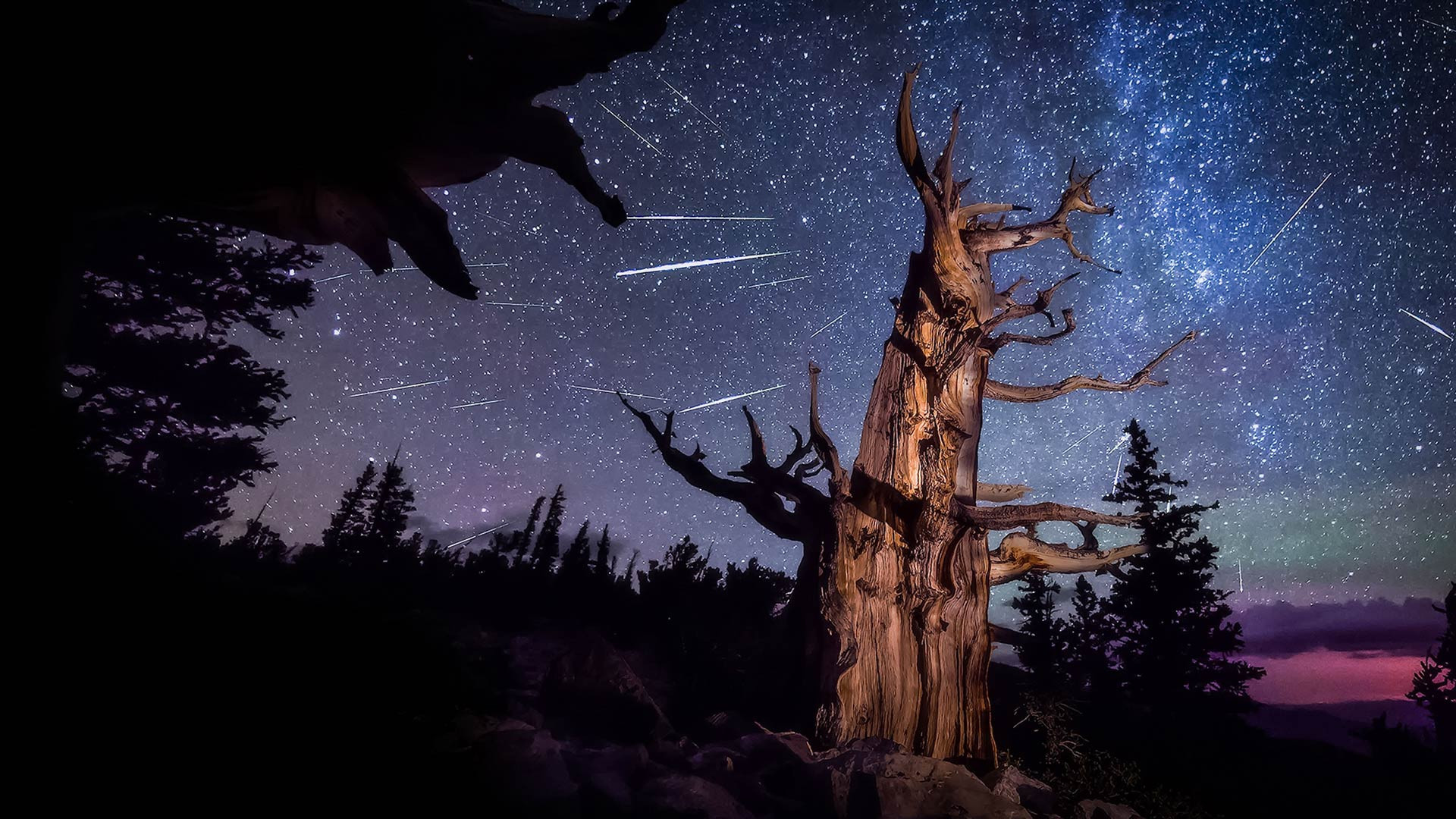
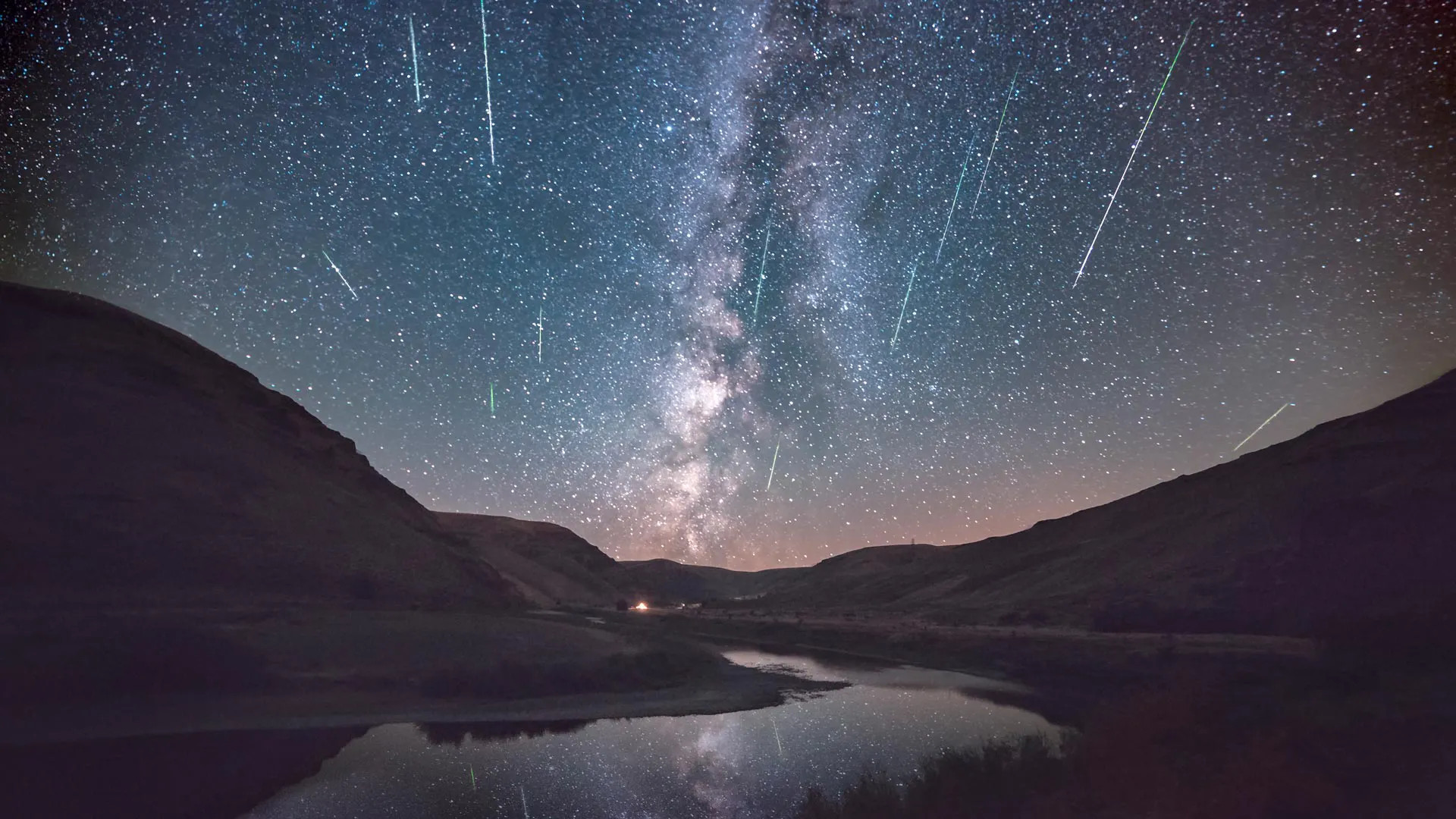
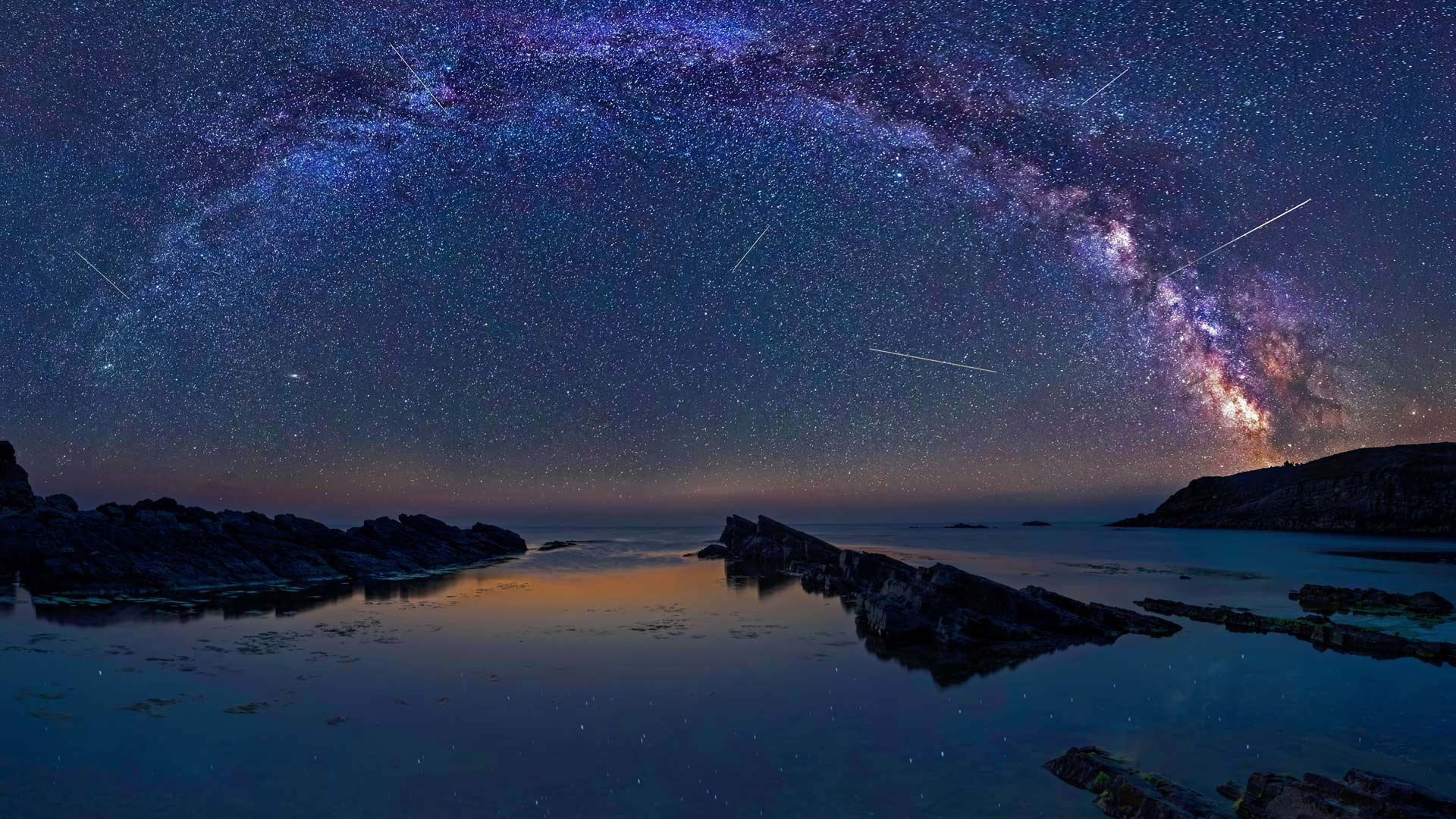
Every year, from mid-July to late August, the Perseids light up the night sky, peaking around August 12–13. Under dark skies, they frequently discharge dozens of meteors within the space of an hour, and are visible over most of the planet. Each streak typically lasts less than a second.
These meteor showers are called Perseids because they appear to be coming from the constellation of Perseus. However it was discovered in 1866 that these meteor showers actually originate from the debris shed by the Comet Swift-Tuttle, and occur when the Earth passes through its lingering dust trail.
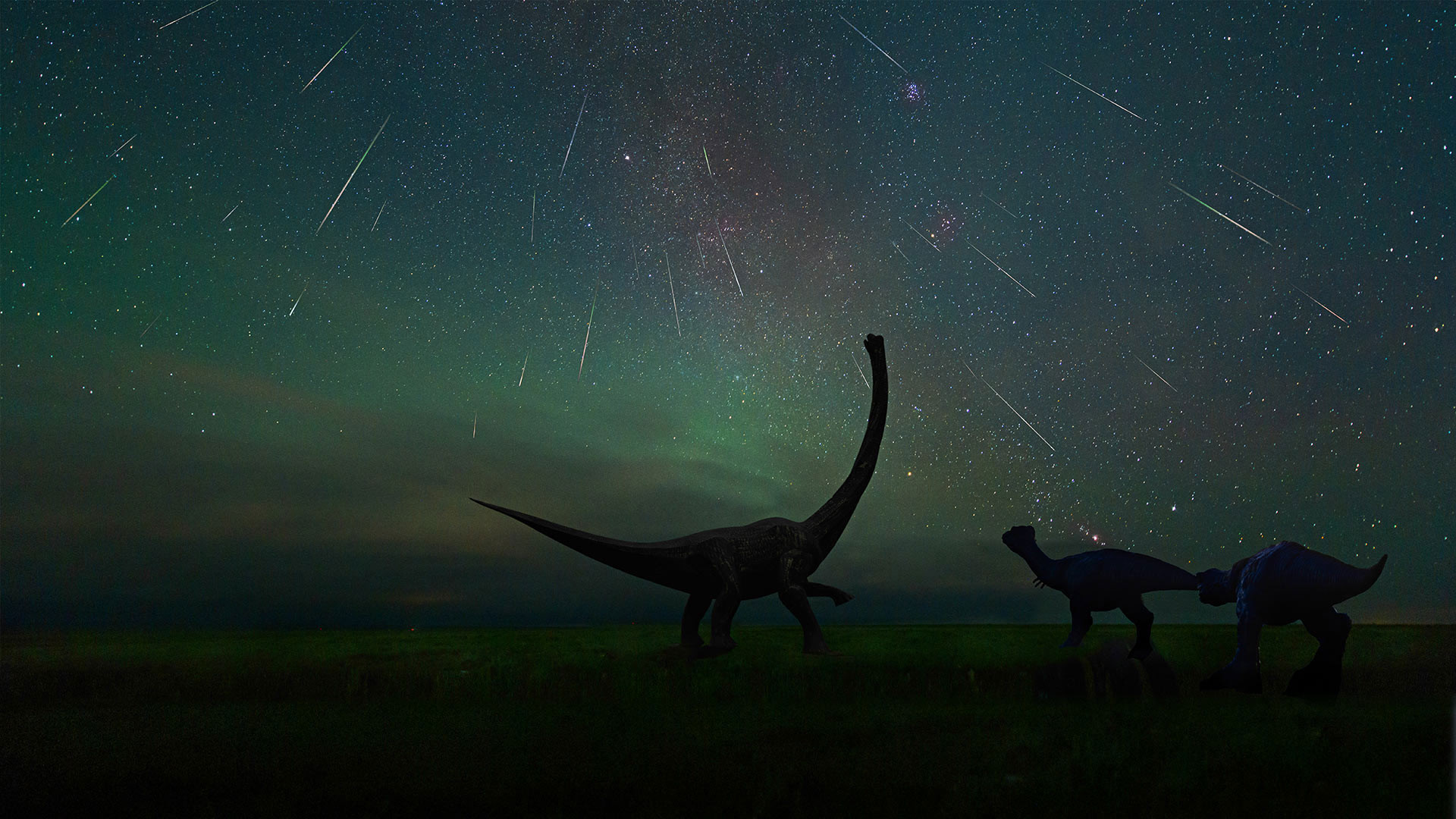
PS. In case that you're wondering, the dinosaur in one of these images is from the Dinosaur Museum of Erenhot, in Inner Mongolia, China.