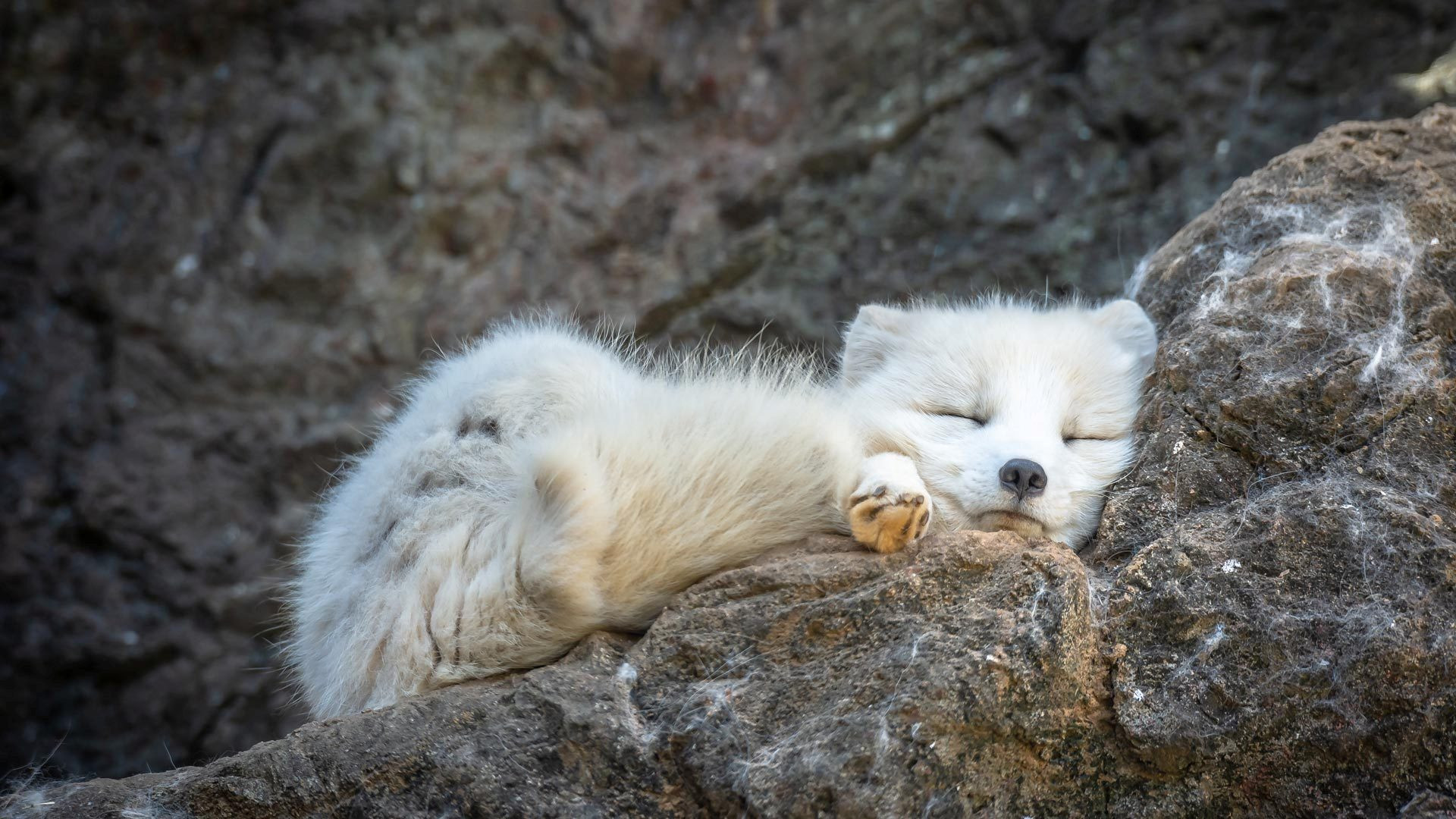
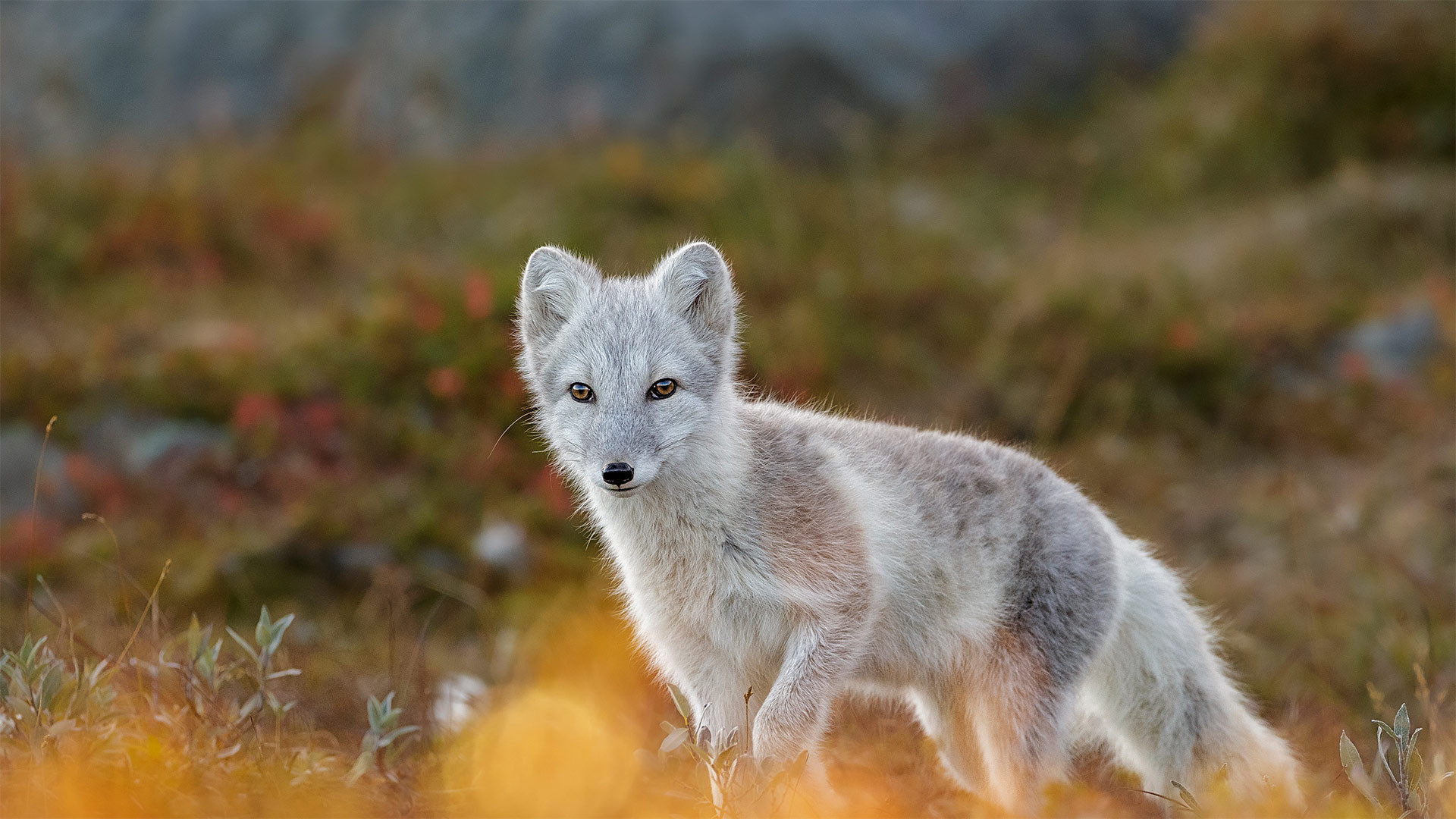
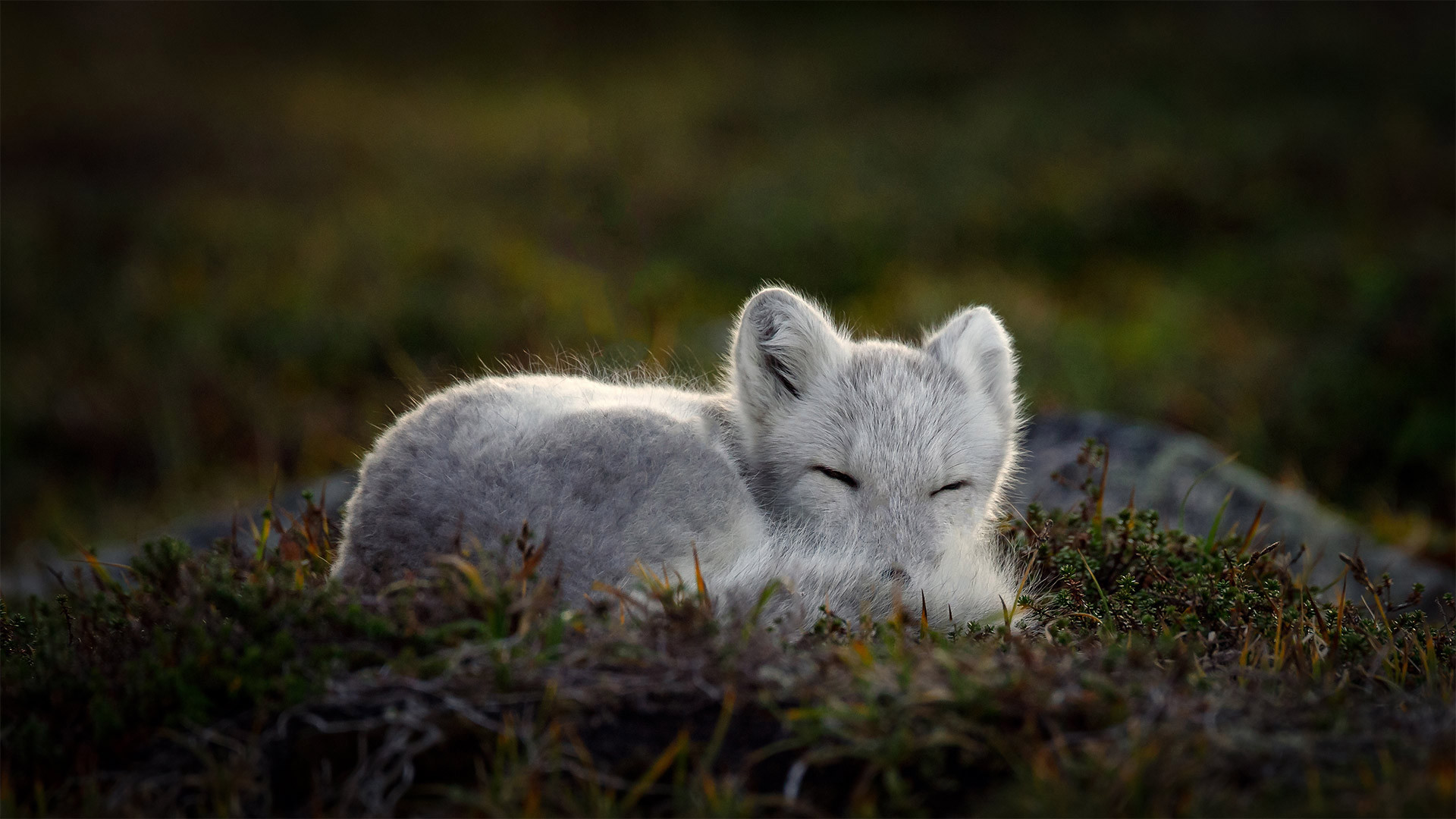
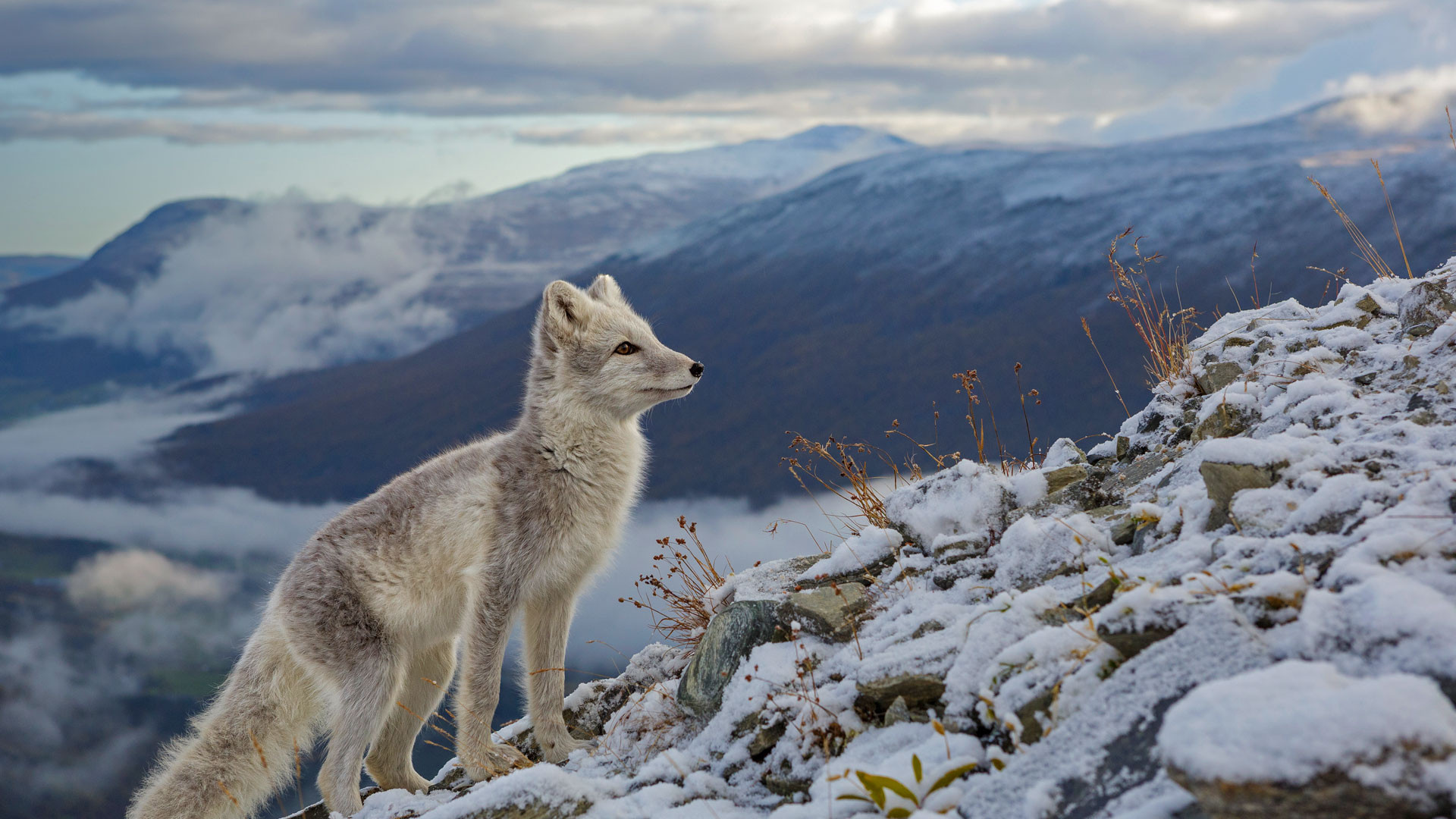
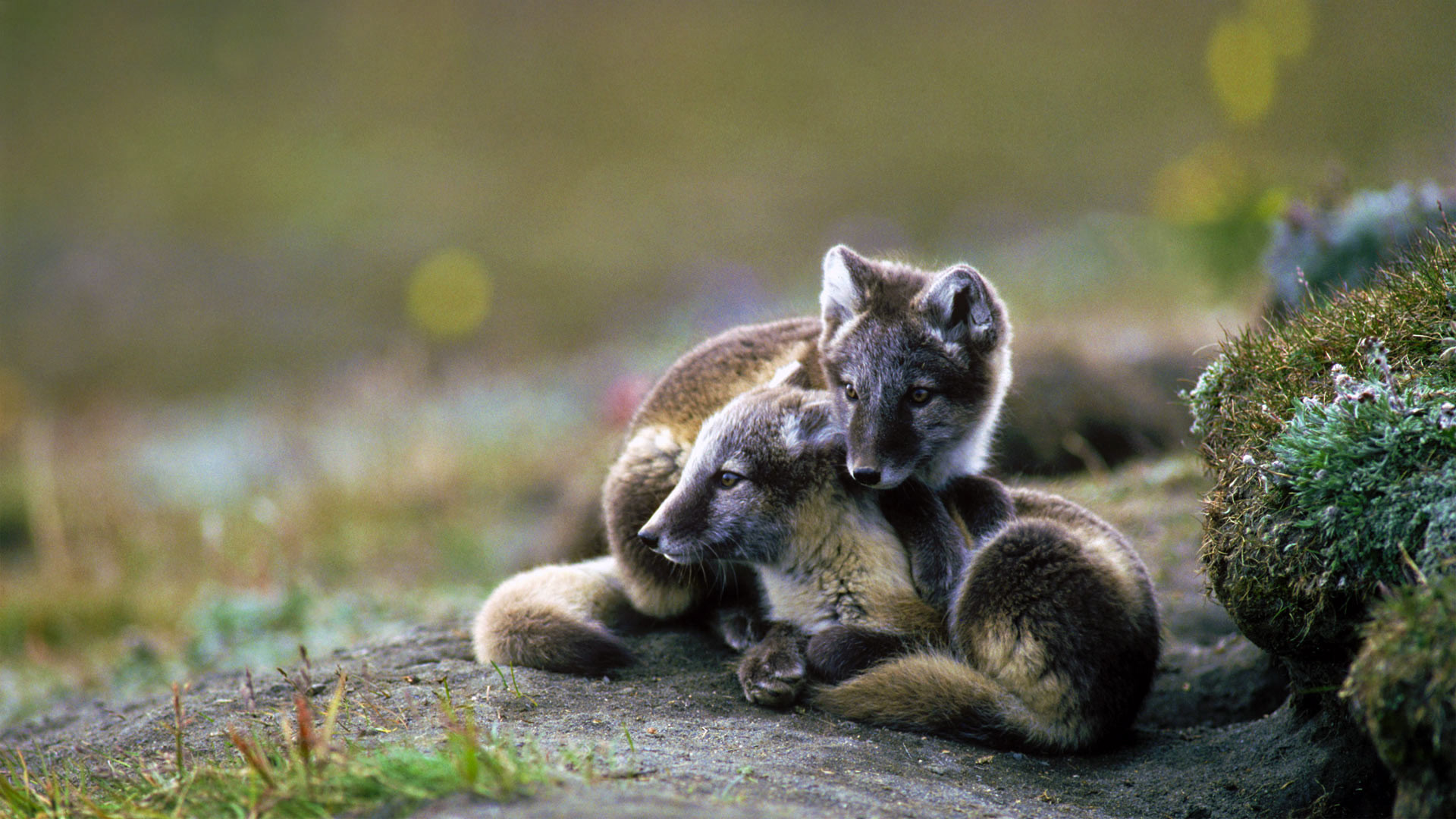
During winter Arctic foxes are capable of enduring a temperature difference of up to 90 – 100°C between their external environment and their internal core temperature. When it is very cold, the Arctic fox curls up tightly, tucking its legs under its body and its head behind its furry tail. This position gives the fox the smallest surface area to volume ratio and protects the least insulated areas. Arctic foxes also stay warm by getting out of the wind and residing in their dens. Although the Arctic foxes are active year-round and do not hibernate, they can preserve their fat reserves by reducing their locomotor activity. In the autumn they build up their fat reserves, sometimes increasing their body weight by more than 50%, so as to provide greater insulation during the winter and a source of energy when food is scarce.