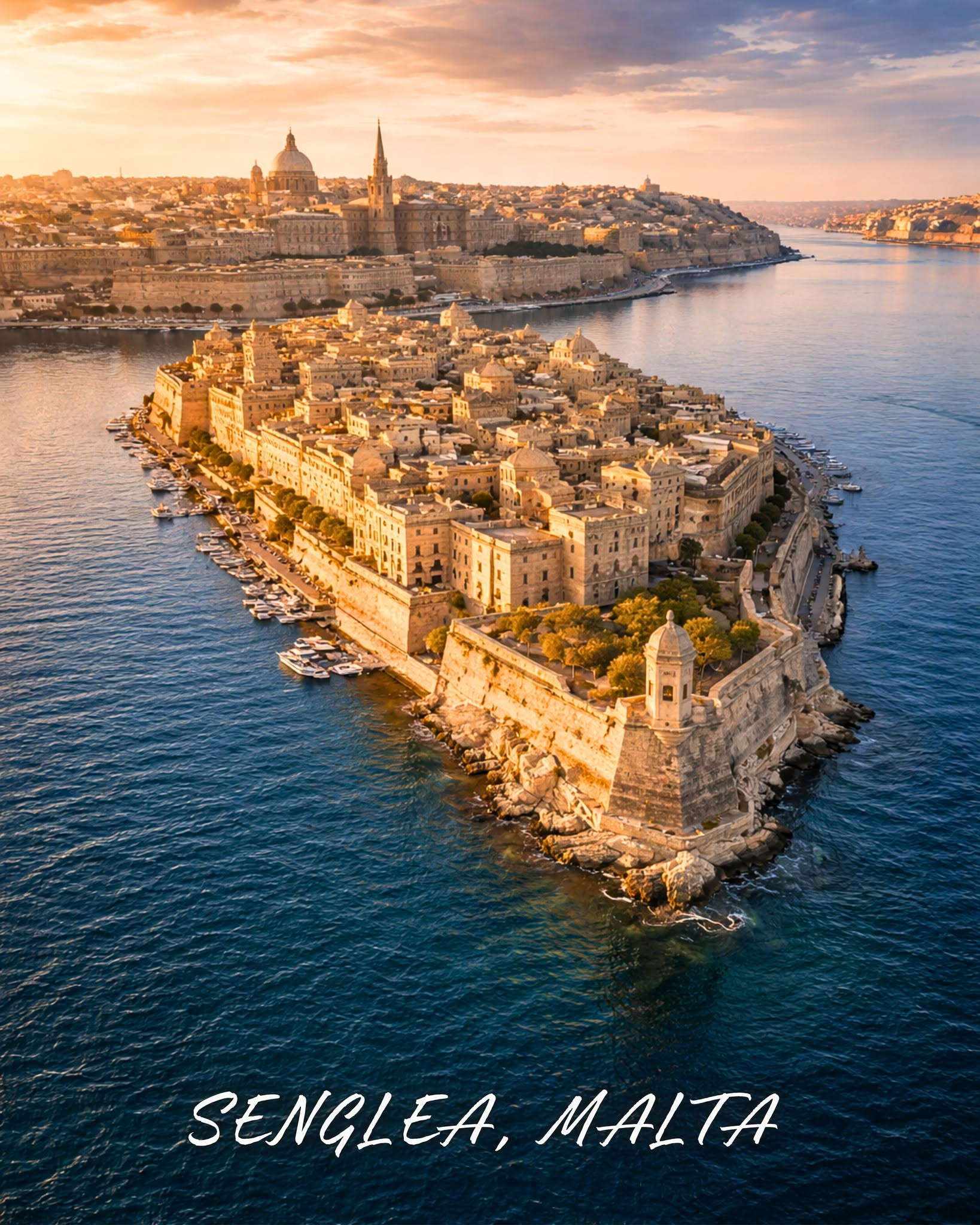
Senglea is presently a fortified peninsula jutting out into Malta's Grand Harbour. Its Maltese name, L-Isla, comes from the Italian word "isola" (meaning island), because originally it was a detached landmass.
The land bridge connecting Senglea (L-Isla) to the mainland (Cospicua) was constructed during the 16th century by the Knights of St. John. The exact year is not definitively recorded, but the island was fortified starting from 8th May 1552, when the foundation stone of Fort St. Michael was laid. Work on the fort, which was designed by Architect Pedro Pardo, was completed in 1553. Construction of the walled town of Senglea was completed during the following decade, just in time for the Great Siege of Malta in 1565. Senglea was given the status of a city by Grand Master Claude De La Sengle, and is named after him.
Before the creation of this bridge, Senglea was entirely surrounded by water and was known as the island of L'Isola di San Giuliano (or simply L'Isla, from the Italian word for island), and was part of a town called Birmula. L'Isola di San Giuliano was originally utilised by the Knights as a hunting ground.